

Thane is a township problem, not a building problem
Most of what we run in Thane is not a single tower — it is a phased development with four to ten buildings, a shared podium, a clubhouse, a sewage treatment plant and two or three thousand residents. That changes the job completely. The unit of work is the estate, not the lobby, and the person the client actually deals with is a committee, not a facilities head.
Where township contracts usually fail
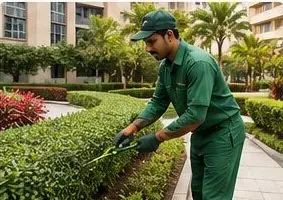
Three places, in our experience. The STP stops being maintained properly and the society finds out through a smell complaint or an MPCB notice. The landscaping and the clubhouse fall between contracts because nobody wrote down who owns them. And the handover from the developer to the society leaves no record of what was actually installed.
We scope all three explicitly. The STP gets a named operator and a logged reading schedule, the soft landscape and clubhouse sit inside the same contract as the housekeeping, and we hold an asset list from day one so the society is not guessing what it inherited.
Ghodbunder Road and the commute reality
Staffing a Thane township means solving travel before you solve anything else. We recruit locally wherever we can and build shift timings around the actual bus and rail options, not a theoretical roster. It is the difference between a contract that is fully manned on a Monday morning and one that is quietly running three people short.
Reporting a committee can read
Managing committees change every year or two, and the incoming members inherit a contract they did not negotiate. We report in plain language — what was done, what is due, what needs a decision and what it will cost — so an AGM can follow it without a facilities background.